Artist, Draughtsman & Art Director
William Henry Blackburn (1918–1995) was a British artist, draughtsman, calligrapher, exhibition designer and art director whose career moved between fine art, wartime service, India and commercial design. Husband to Dhanlaxmi Mehta and father to Munindra Nigel Blackburn, he built a working life that joined artistic sensitivity with technical precision.
His archive reveals a rare breadth of practice: paintings, drawings, calligraphy, photography, exhibition models, advertising work and public display design. He was not a painter alone, but a multidisciplinary visual artist whose work united studio art, lettering, draughtsmanship and professional design.
D.J. Keymer, Bombay & Calcutta
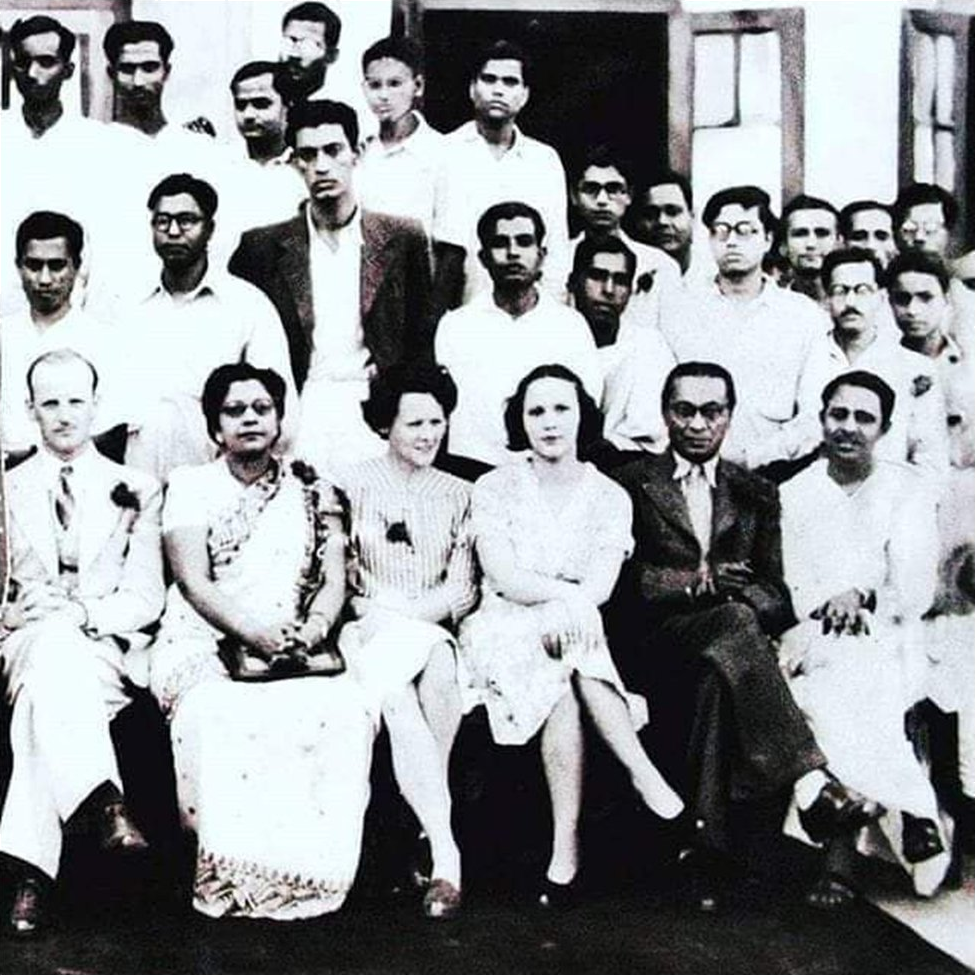
William joined D.J. Keymer & Co. Ltd. as Art Director in Bombay before transferring to the Calcutta head office, working within one of India's most important mid-century advertising and design environments. The agency's studios paired experienced art direction with younger visualisers finding their feet—some of whom would later become central to Indian design and film culture.
The Calcutta circle was historically significant. William worked there with figures of comparable standing, including Annada Munshi, D.K. Gupta and Satyajit Ray—names that would come to define Indian advertising, publishing, typography and film culture.
Much of his Keymer work has remained in the family archive for more than thirty years and has never been publicly shown, even though it belongs to the same wider design world. The agency later became part of the lineage that led to Ogilvy Benson & Mather in India.
Commercial Design, Public Exhibitions & Client Accounts
D.J. Keymer & Co. Ltd., Bombay, 1947–1952 (as Art Director)
- Shell
- Rootes Group
- BOAC
- Bourjois
- Aspro-Nicholas
D.J. Keymer & Co. Ltd., Calcutta Head Office, 1952–1955 (as Art Director)
- Dunlop
- ICI (Imperial Chemical Industries)
- Indian Iron and Steel Corporation
- Assam Oil Company
- Guest Keen & Williams
- British Oxygen
- Metal Box
- Philips Holland
- Liptons
Architectural, Mural & Interior Design Work
- Architectural mural work
- Pan American Airways office scheme
- Government laboratories
- Telephone exchanges
- Ballardie, Thompson & Matthews, Calcutta
London Advertising & Agency Networks
- S. H. Benson Ltd., London — advertising agency contract work
- Colman Prentis and Varley Ltd., Advertising and Marketing, London
- Later British design, lettering, calligraphy and commercial work
- First Pretty Polly advert
Public Exhibitions & Government Work
- Government of India Information and Broadcasting Department
- Exhibitions Division, Information and Broadcasting Department
- Central Office of Information, London
- Parliament Past and Present Exhibition, House of Commons
- Indian Railways Centenary Exhibition, New Delhi
- Government Railway Exhibition, Delhi
- Combined Services Recruiting Exhibition, New Delhi
- Grow More Food Exhibition, Lahore
- Martial India Exhibition
- Ministry of Information exhibitions
- And So to Work Rehabilitation Exhibition
- Rehabilitation Exhibition
- Coal Exhibition
- Industrial Wales Exhibition
- 1951 Festival of Britain Exhibition and Ship
- School of Art for the Services, South East Army Command, Oxford
Paintings & Works on Paper
Alongside his commercial and public design work, William maintained a substantial body of paintings, drawings and studies across several decades. His subjects range from Indian figures, landscapes and scenes of daily life to quieter works made at home in England.
The paintings show the same disciplined eye found in his draughtsmanship and lettering: structure, movement, balance and atmosphere. Much of this work has remained within the family collection since his death, making the archive an important rediscovery rather than a familiar public record.
Calligraphy, Lettering & Inscription Design
William's work in calligraphy and lettering formed an important part of his wider design practice. Alongside painting, exhibition work and commercial art direction, he produced inscription designs, decorative lettering and carefully structured written layouts that show the same precision found throughout his draughtsmanship.
A surviving design reference sheet shows him setting out requirements for commissioned inscription work in great detail, including copy length, historical information to be supplied, preferred colour combinations and alternative geometric formats in which lettering could be arranged. His work included formal calligraphic layouts, inscription planning and decorative letterforms intended for presentation pieces and commemorative use.
His calligraphy and lettering were widely respected within his professional circle. In 1947, after being admitted as an Associate of the Incorporated Institute of British Decorators, William was invited to design a bookplate for the Institute's rebuilt library in London. Across these works, his lettering brought together an artistic eye with structure, balance, order and design craftsmanship.
Detached Royal Engineers in India
William's wartime service began in Britain with the King's Royal Rifle Corps and the Royal Engineers, before his skills as an artist and draughtsman led to more specialist military work. He conducted a School of Art for the Services under South East Army Command at Oxford, where drawing, mapping, model-making, instruction and technical visualisation had direct wartime value.
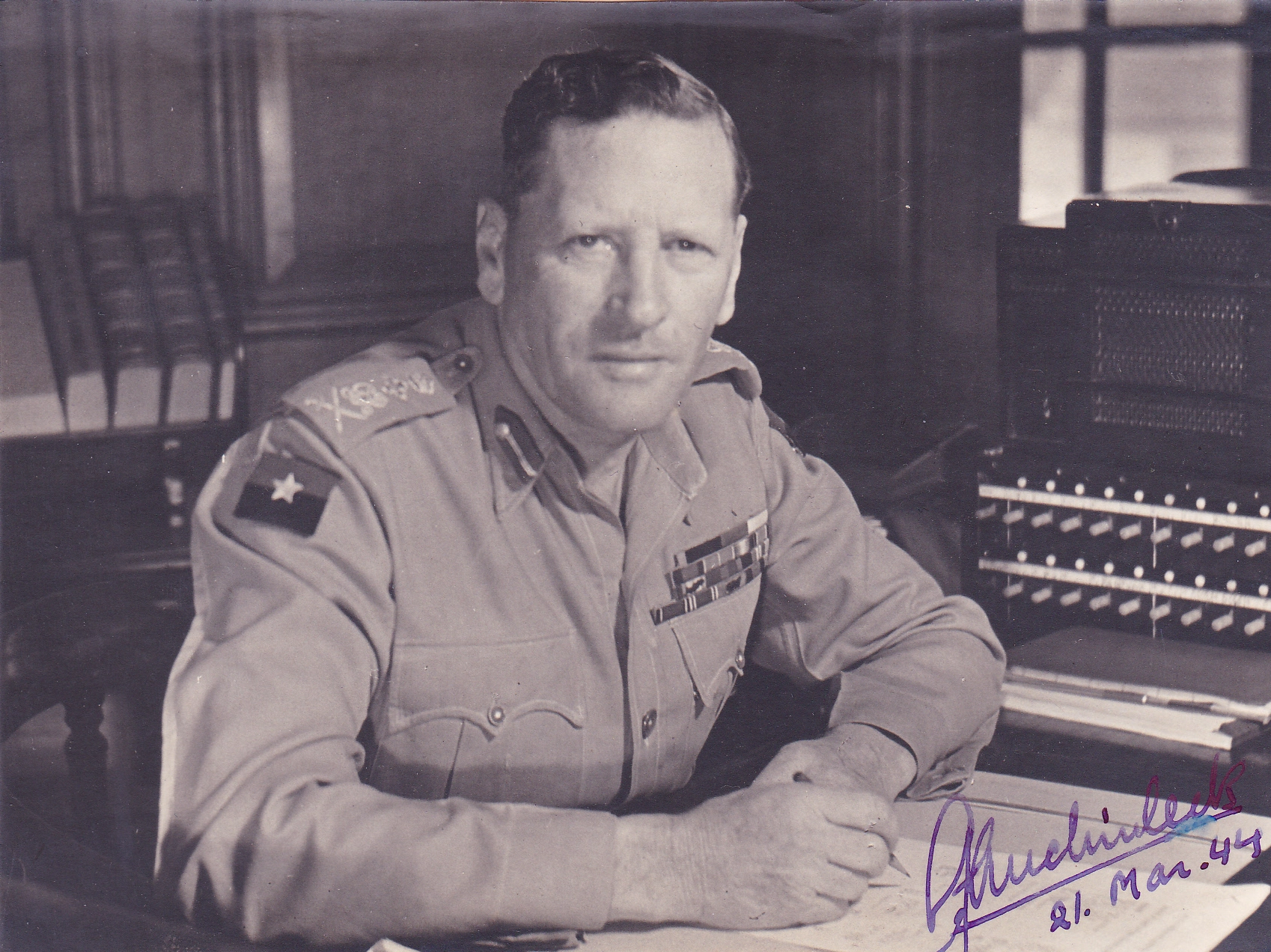
From 1942 to 1945 he served in India as detached Royal Engineers, attached to the Government of India's Information and Broadcasting Department during the wider Burma campaign against Japan. His India years sat within the command world of Field Marshal Sir Claude John Eyre Auchinleck, whose signed photograph, dated 21 March 1944, remained in William's possession.
As a Royal Engineer, William also worked on bridge-building. That engineering side of his service belongs naturally to the India/Burma wartime world of roads, river crossings, military movement, logistics and visual documentation. His work brought together practical engineering, draughtsmanship, public information and the discipline of wartime communication.
Wartime Exhibition Design
In India, William's wartime design work moved beyond ordinary military duty into official publicity, recruitment, exhibition and public-information projects. Attached to the Government of India's Information and Broadcasting Department, he worked on visual material and exhibitions in New Delhi, Lahore and across India, using design to explain, promote and support the wider war effort.
William worked alongside Frederick Harry “Harry” Baines in this specialist exhibition and information world. Both men were Royal Engineers artist-draughtsmen connected to government publicity and display work in India. Their work brought together drawing, murals, lettering, industrial subjects, exhibition stands, pavilions, public displays and visual promotion.
This was also the context in which William produced studies of Indian architecture, sculpture and cave temples, including work connected to Cave 16, the Kailasa Temple at Ellora. Surviving archive references link these drawings to the wider Hyderabad archaeological world of Ellora documentation, placing them within a serious artistic, historical and institutional setting rather than as casual travel sketches.
Their connection continued after India. In September 1946, William and Baines exhibited together at India House, Aldwych, in a Royal India Society exhibition of drawings from India, including studies from the Ellora Caves. The exhibition, opened by Sir William Barton, presented their Indian work in an official cultural setting and confirmed the importance of their shared artistic, documentary and exhibition practice.
Love For India
India became one of the defining chapters of William's life, both personally and artistically. He married Dhanlaxmi Mehta, a mathematician and professor from a distinguished Indian family, and together they later moved back to England, settling in Wimbledon, London, where they raised their son, Munindra Nigel Blackburn, known as Nigel.
Nigel grew up within a family shaped by education, service and medicine. He trained at King's College Hospital and went on to become a substantive orthopaedic consultant, continuing a wider family tradition of professional discipline, public service and medical life.
William's Indian years were lived against the intensity of wartime and postwar change. He was there during the Bengal Famine of 1943, the Burma campaign, the final years of British India, and the country's movement toward independence. For an already established artist, India offered not only subject matter, but a world of human observation, visual richness, professional opportunity and lasting personal connection.
His work from this period reflects that depth. India appears in his paintings, drawings, photographs, cave studies, exhibition designs and studies of daily life — not as distant travel imagery, but as part of the lived world that shaped his family, his career and his imagination. From Ellora and Aurangabad to Bombay, Calcutta, New Delhi and Lahore, India remained central to the story of William's life. When Dhanlaxmi died in the early 1990s, he ensured her ashes were spread in the River Ganges.
Photographer
Photography sat naturally alongside William's drawing and painting. He used the camera as a visual notebook: gathering reference, studying gesture and form, recording people, places, rivers, boats, streets and everyday life around him.
Many of the photographs from his India years stand as works in their own right. They show the same attention to composition that shaped his paintings, exhibition design and art direction. Seen together, the photographs help reveal how he looked at the world before translating it into drawing, paint, lettering or design.